
Clermont, FL Public Safety: Police, Fire & EMS Readiness + Resources
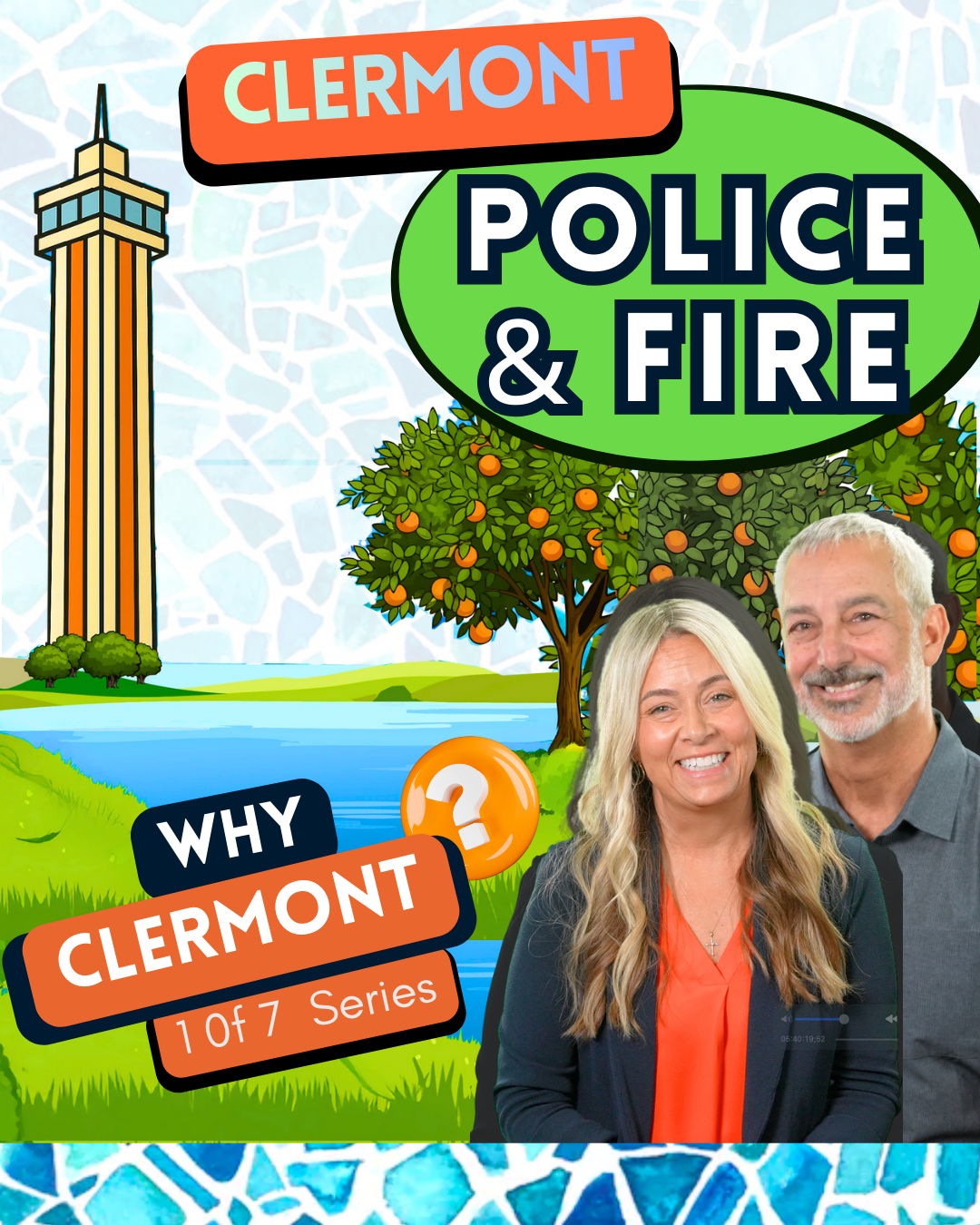
When people ask if Clermont is safe, they’re usually asking something deeper.
Safety is personal and everyone evaluates it differently. As real estate professionals, we don’t rank or label neighborhoods as “safe” or “unsafe.” Instead, this article shares publicly available information about Clermont’s public-safety initiatives so you can review the details and decide what feels right for you.
Clermont’s leadership is setting the pace and is continually investing, planning and implementing in the safety of its residents. Known as the “Choice of Champions”, the city embraces an Olympic style mindset in everything they do.
Clermont’s leaders aren’t treating safety like a marketing line, they’ve said the goal out loud and they’re actively making it happen!
Thinking about moving to Clermont, FL? See how the city is building long-term safety through strong leadership, accredited policing, smart technology, and elite fire/EMS readiness, so families and businesses can thrive.
Clermont, Florida Safety: What’s Actually Behind the City’s “Safest City” Goal
When you’re deciding where to move your family, retire, or grow a business, “safe” isn’t a checkbox. It’s the environment that shapes everything, how often you’re outside, how comfortable you feel downtown, whether you let your kids ride ahead on the trail, and how confident you are that a growing city won’t lose what made it special in the first place.
Clermont’s safety story stands out because it isn’t reactive. It’s built like a long-term system, driven by leadership goals, professional standards, smart tools, intentional planning, and a community culture that participates.

1) The city has a stated goal and leadership is aligned around it
Clermont has made something very clear: safety is a top-tier priority, and leadership is willing to be measured by it. That matters more than most people realize. In many cities, safety is discussed in generalities. In Clermont, it’s treated as a performance standard the city is actively working toward.
Police Chief John Graczyk described Clermont as “one of the safer communities within the state of Florida,” and added, “we wanna become the safest city in Florida.” Deputy City Manager Dan Matthys reinforced the direction: “make Clermont the safest city in central Florida, if not all of Florida.” City Manager Rick Van Wagner tied it directly to action: “We’re hiring more police and more fire and increasing our services so we can be the safest city in Florida.”
Why it matters to you
If you’re relocating, you want to know the city is thinking ahead, not just keeping up. A clear, public goal typically leads to clearer budgeting, smarter staffing decisions, and better follow-through. For families, it means more confidence letting kids be kids. For business owners, it signals stability, customers feel comfortable coming out, employees feel safer at work, and a downtown can thrive without losing its appeal.
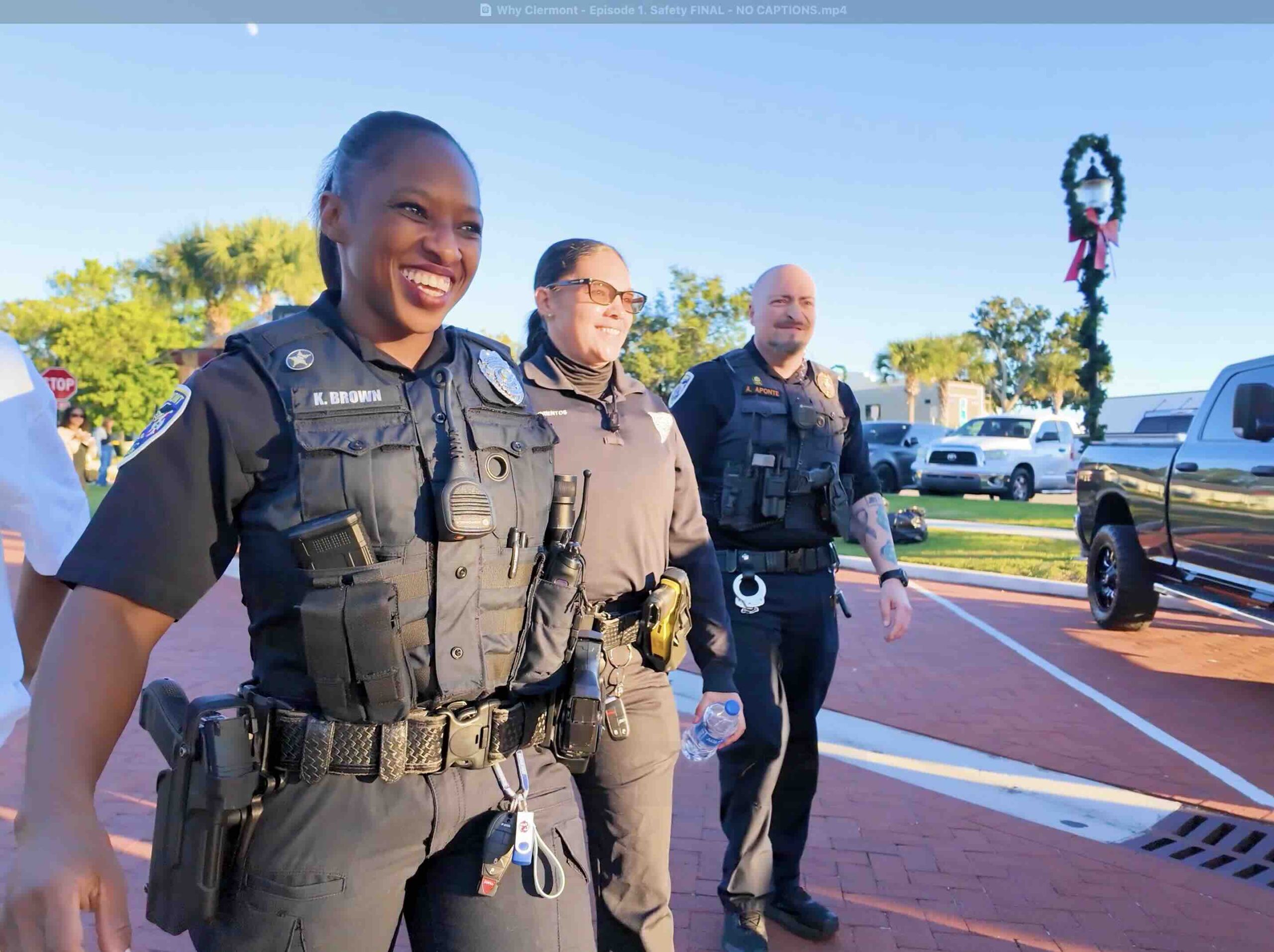
“We’re hiring more police and more fire and increasing our services so we can be the safest city in Florida.”
—Rick Van Wagner, City Manager
2) Clermont’s police department is built for consistency, not just coverage
Clermont’s police department is structured like a department that expects a city to grow and intends to stay ahead of that growth. It’s full-service and operates 24/7 with specialized units in-house. That structure supports a more consistent experience for residents: quicker coordination, less red tape, fewer handoffs, and better continuity when issues need follow-up.
Captain Malcom Draper explained Clermont has “patrol, traffic, detectives, canine and specialized units right here in Clermont.” He also emphasized that when residents call 911, it’s officers who “know these streets and this community” responding.
Why it matters to you
Having officers who truly know the community directly shapes quality of life. It means you’re not just getting a response, you’re getting a response from professionals who understand the neighborhoods, know the residents, the traffic patterns, the event schedule downtown, and where problems tend to surface. That increases effectiveness, but it also builds something even more important: trust. And in a community you’re choosing to put roots down in, trust is everything.
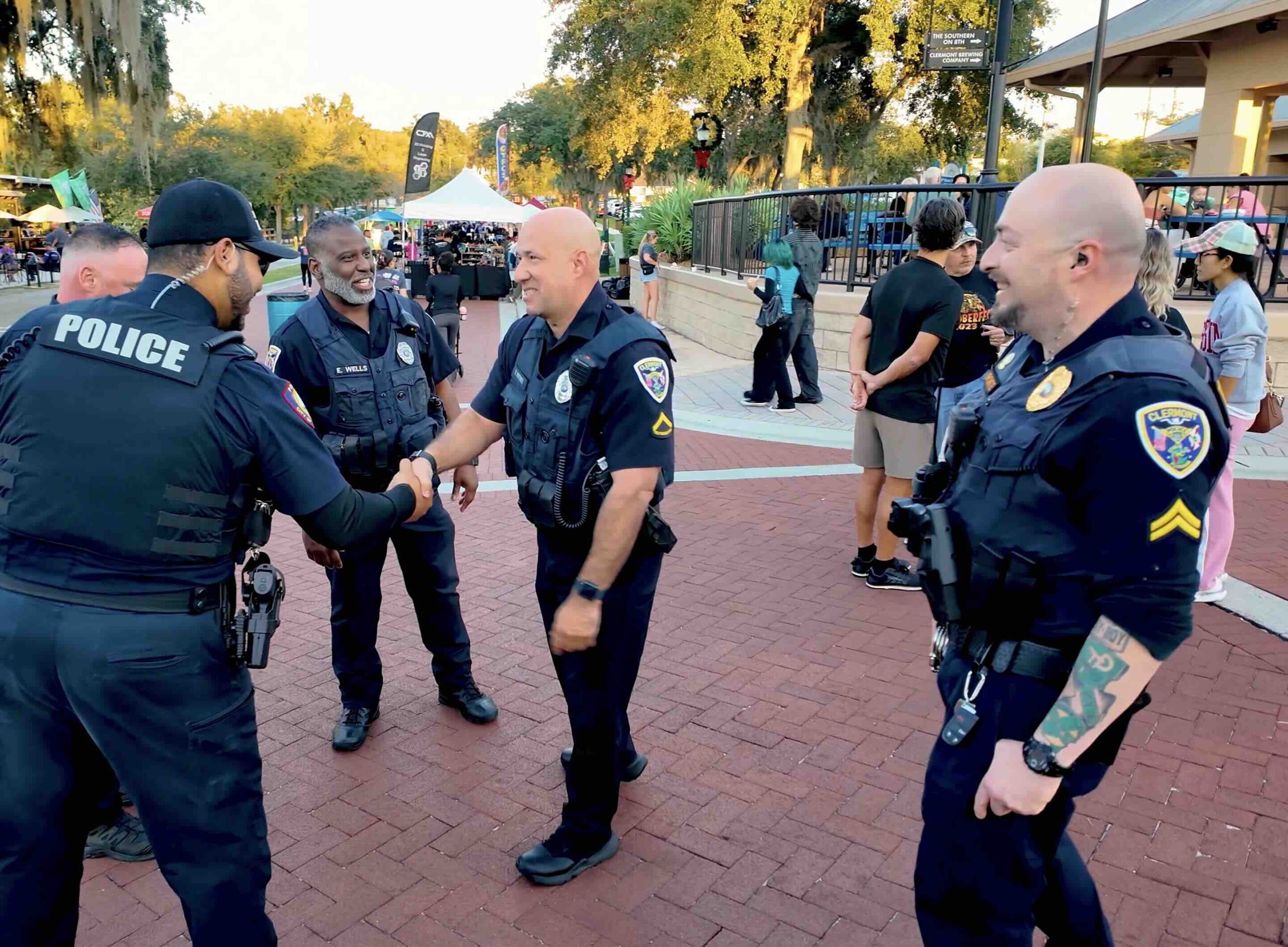
“As a full service 24/7 police department… we have our own patrol, traffic, detectives, canine and specialized units right here in Clermont.”
—Captain Malcom Draper, Clermont Police Department
3) Standards are enforced through accreditation, hiring, and training
One of the most overlooked elements of real safety is consistency over time. Clermont has focused heavily on professionalism and accountability, systems that don’t depend on who is in charge this year, but on standards that continue year after year.
Captain Draper explained the department’s accreditation process as an “outside body… regularly” reviewing “how we operate, our policies, our training, our hiring practices, and how we serve the public.” He also described a highly selective hiring process with multiple interviews, testing, and evaluations, designed to ensure the right people represent the city.
Why it matters to you
Accreditation and selective hiring reduce “wild swings” in quality. For families, that’s the difference between feeling safe in theory and feeling safe in practice. For business owners, it supports stable operations, especially during late hours or busy event weekends. For anyone relocating, it’s reassurance that you’re moving into a community where safety is treated as a profession, not a gamble.
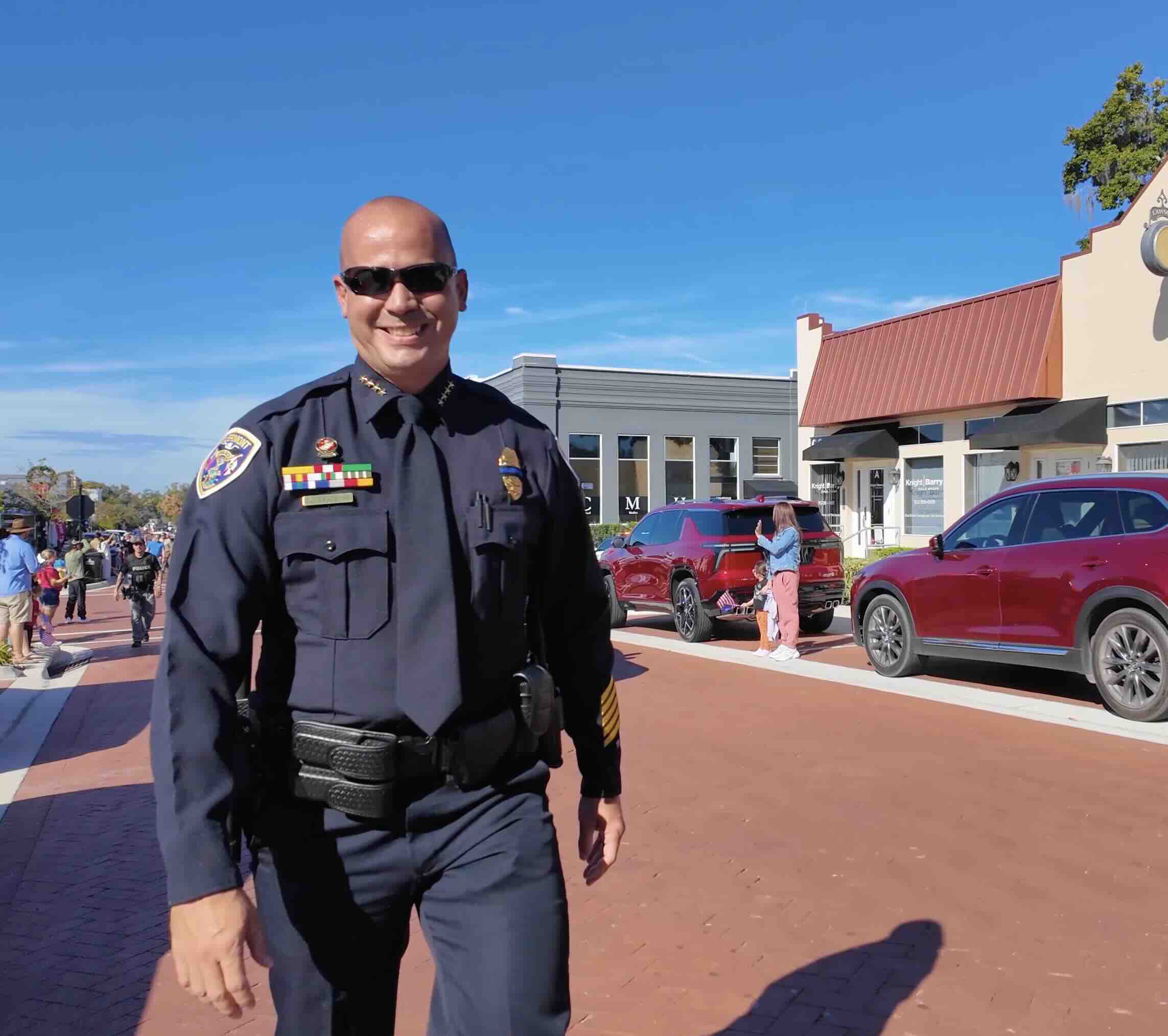
“We’ve been accredited since 2004… an outside body is regularly reviewed how we operate, our policies, our training, our hiring practices, and how we serve the public.”
—Captain Malcom Draper, Clermont Police Department
4) Technology is being used to improve outcomes and evaluated for real value
Clermont’s investment in license plate readers is a good example of using technology to improve outcomes without adding friction for residents. These high-speed cameras are positioned at key points around the city and automatically scan plates as vehicles pass, then alert officers in real time when a plate is connected to a stolen vehicle or an active warrant. Chief John Graczyk shared that the department has “advanced license plate readers located throughout the city,” and that they’ve seen “a lot of success” using them to recover stolen vehicles and apprehend individuals with felony warrants. The practical benefit is speed: instead of finding out after the fact, officers can respond quickly, often before a situation escalates, helping deter crime and keep Clermont one step ahead.
Smart cities use technology to reduce friction, meaning fewer delays, faster investigations, and more efficient response without losing public trust. Clermont’s approach is notable because it’s not “tech for tech’s sake.” The emphasis is on measurable benefit.
Just as important, he stressed that tools are continuously evaluated: if technology isn’t making the department more effective, “we get rid of that software… we’re not just buying programs and wasting taxpayer dollars.”
Why it matters to you
When a city uses technology well, you feel it in everyday life, less disruption, faster resolution, and a stronger ability to stop issues before they spread. In Clermont, tools like license plate readers are part of that strategy. These systems flag stolen vehicles and vehicles tied to active warrants as they move through key corridors, giving officers real-time awareness and allowing them to respond sooner and more precisely. For families, that translates into more freedom and less worry, because the city is built to catch problems early, not after the fact. For business owners, it’s confidence that the places where people shop, dine, and spend time are being protected in a practical, proactive way, because safe commerce is thriving commerce.
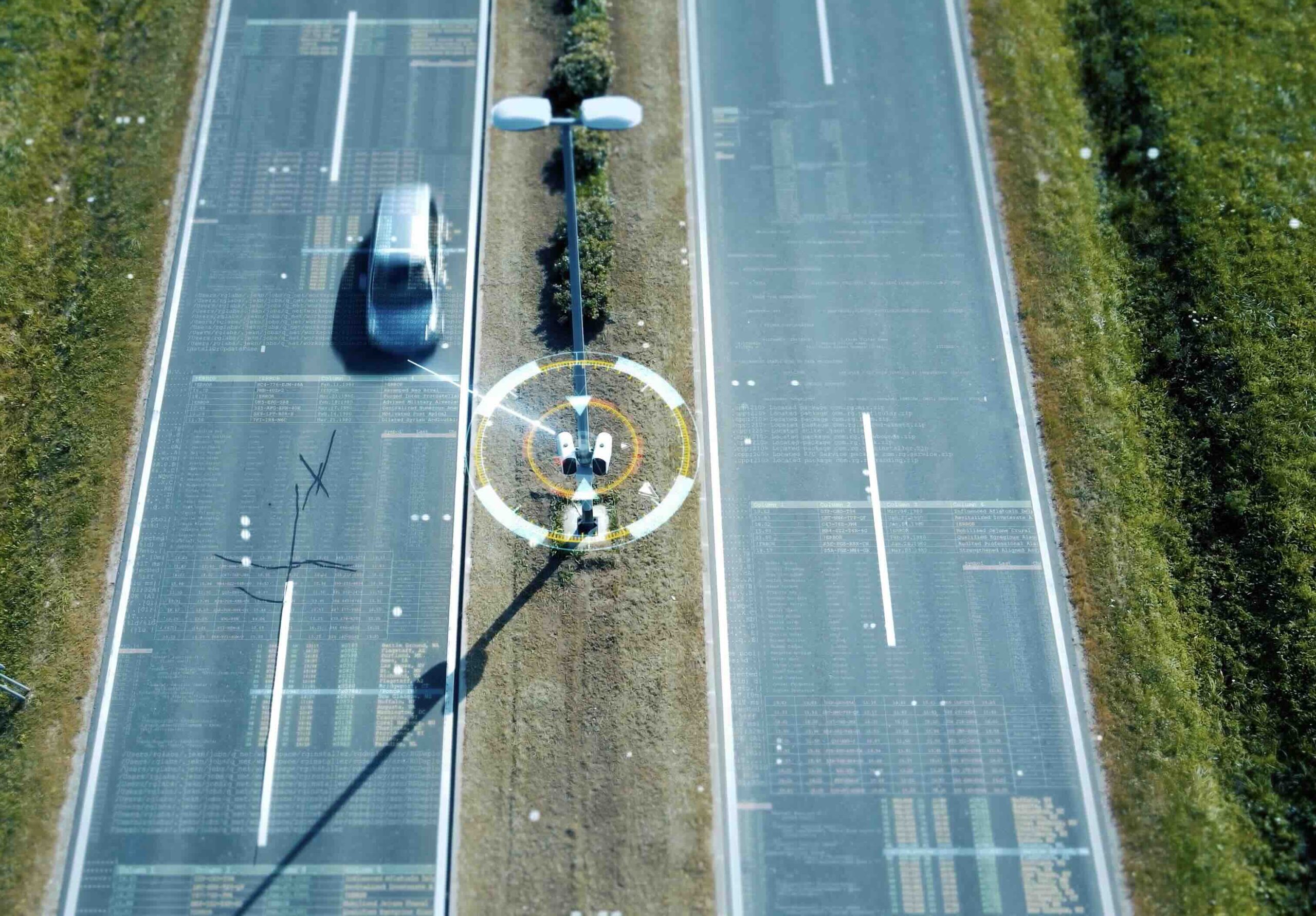
“We’ve had a lot of success recovering stolen vehicles and apprehending people with felony warrants.”
—Chief John Graczyk, Clermont Police Department
5) “Connect Clermont” adds community partnership with clear privacy lines
Clermont is leaning into a modern reality: cameras are everywhere, and when residents choose to participate, those cameras can become a powerful tool to solve problems quickly. The key is doing it with boundaries.
Connect Clermont is designed to speed up investigations when something happens nearby. When an incident occurs, the police can quickly identify which homes or businesses have cameras in the area and request footage from owners who have opted in, so they’re not wasting critical time knocking on random doors. The result is faster leads, quicker answers, and a stronger ability to resolve cases without crossing privacy boundaries.
Connect Clermont is described as opt-in. Dan Matthys emphasized, “They’re not watching people’s cameras by any means.” Chief Graczyk clarified that being in the registry “does not mean that we have access to your camera.”
This matters because it preserves privacy while still enabling fast investigation when an incident occurs.
Why it matters to you
This is the kind of community feature that quietly protects quality of life. It helps get answers faster, reduces investigation time, and creates a stronger deterrent effect, without asking residents to give up control of their personal systems. For families, it’s one more layer of “we look out for each other.” For business owners, it’s a practical tool that can protect storefronts, employees, and customers.
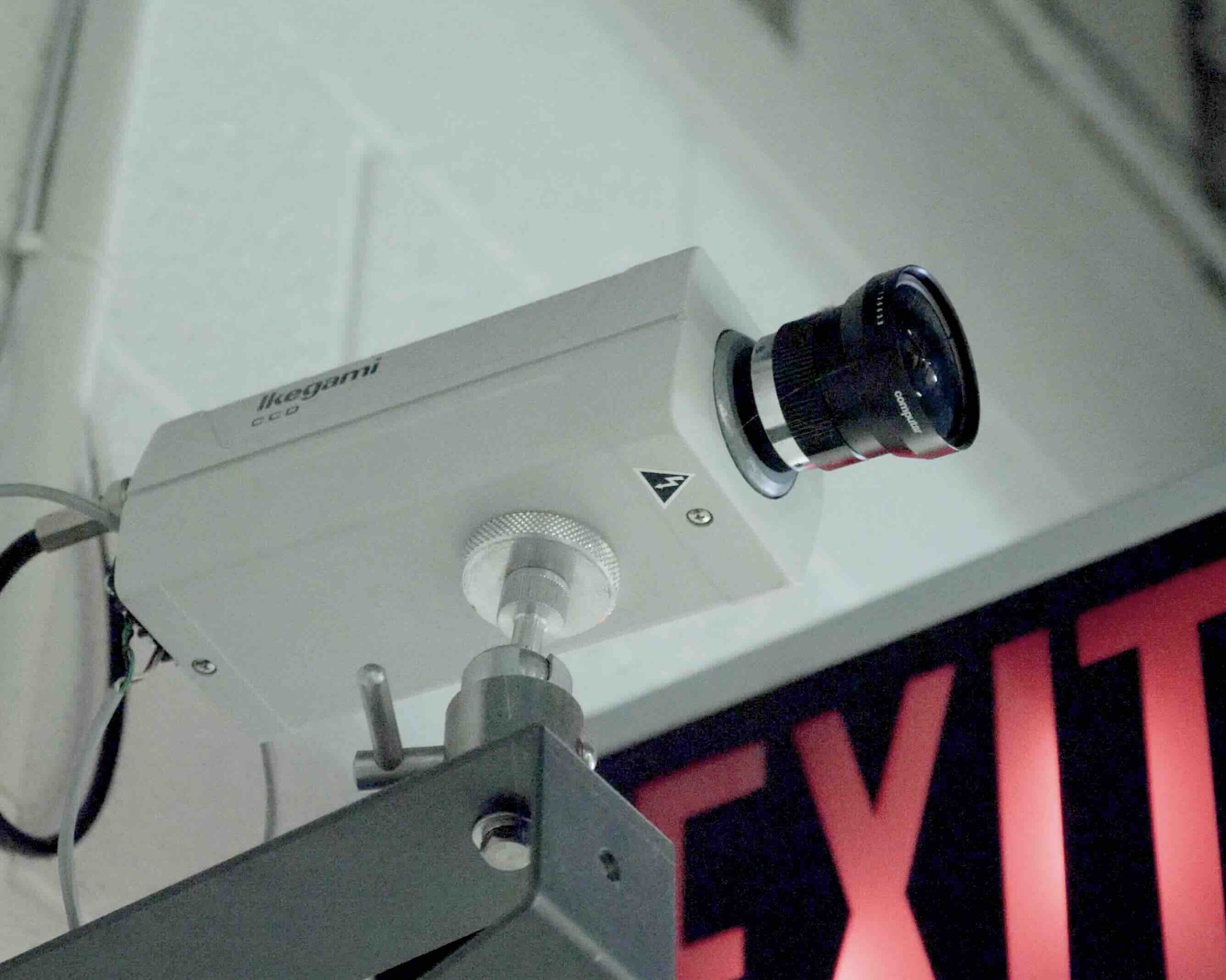
“ The camera never goes on vacation. The camera never gets tired. ”
—Chief John Graczyk, Clermont Police Department
6) Clermont is designing safety into growth using CPTED principles
Clermont’s safety strategy doesn’t begin when a call comes in. It begins before a project is built. The city is using Crime Prevention Through Environmental Design (CPTED) principles; designing spaces to reduce opportunities for crime and increase natural visibility.
Dan Matthys described it as “designing buildings to prevent crime,” with practical examples like “more windows, more visibility,” and avoiding design choices that create dark, hidden corners.
Why it matters to you
For relocating families and businesses, growth can be a concern: will the city become crowded and chaotic, or will it stay livable? CPTED is one of the strongest signals that Clermont wants “good growth”, walkable, visible, community-oriented design that supports safety and comfort. It helps protect the feel of the city as it expands.

“It’s crime prevention through environmental design… designing buildings to prevent crime.”
—Dan Matthys, Deputy City Manager

7) Clermont Fire Department: elite credentials and a realistic focus on EMS
Safety isn’t only about crime prevention, it’s also about what happens when someone has a medical emergency, a severe accident, or a life-threatening event. Clermont’s fire department stands out because it’s operating at an elite level, with performance markers that are rare nationally.
Fire Chief David Ezell shared that Clermont has an ISO Class 1 rating and explained this can help residents and businesses qualify for “the least amount of property insurance… eligible to receive.” He also noted only about “119… out of the 40,000” departments have both ISO Class 1 and accreditation through the Center for Public Safety Excellence.
Ezell also emphasized the department’s all-hazards role: fire suppression is about “1%” of their workload; the bulk is emergency medical services.
Why it matters to you
For families and retirees, EMS readiness is not abstract, it’s personal. Elite standards and accreditation mean training, processes, and readiness are consistently maintained. And because Clermont focuses on the emergencies that happen most often, medical calls, you’re choosing a city where help is structured for real life, not just rare events.

“Here in Clermont, we have an ISO score rating of one, which is the best in the industry…”
—Fire Chief David Ezell, Clermont Fire Department
8) Response times and expansion: planning coverage where growth is heading
Performance standards are only meaningful if they translate into response at your door. Clermont’s fire department has stated a clear benchmark: having a truck at the door within six minutes, 90% of the time. Councilman Bill Petersen referenced current performance as a six-to-eight-minute 90th percentile response time.
Clermont is also expanding services to match growth. Dan Matthys shared the city is investing in a fifth fire station in the Wellness Way area. Battalion Chief Tom Bennett described station placement as thoughtful planning, not simply choosing “a spot on a map,” but asking how to “provide the best to our community.”
The city has also discussed improving EMS transport capability. Matthys described talks about bringing more ambulances into the city’s system over time. City Manager Van Wagner emphasized the goal: “How can we make our transport quicker… we’re gonna do everything we can as a city to make Clermont a safer place.”
Why it matters to you
Fast response is the difference between panic and support, especially in medical situations. And expanding coverage ahead of demand is what preserves quality of life in a fast-growing city. If you’re moving here for the long term, this is exactly what you want to see: a city that scales safety deliberately, not after problems appear.
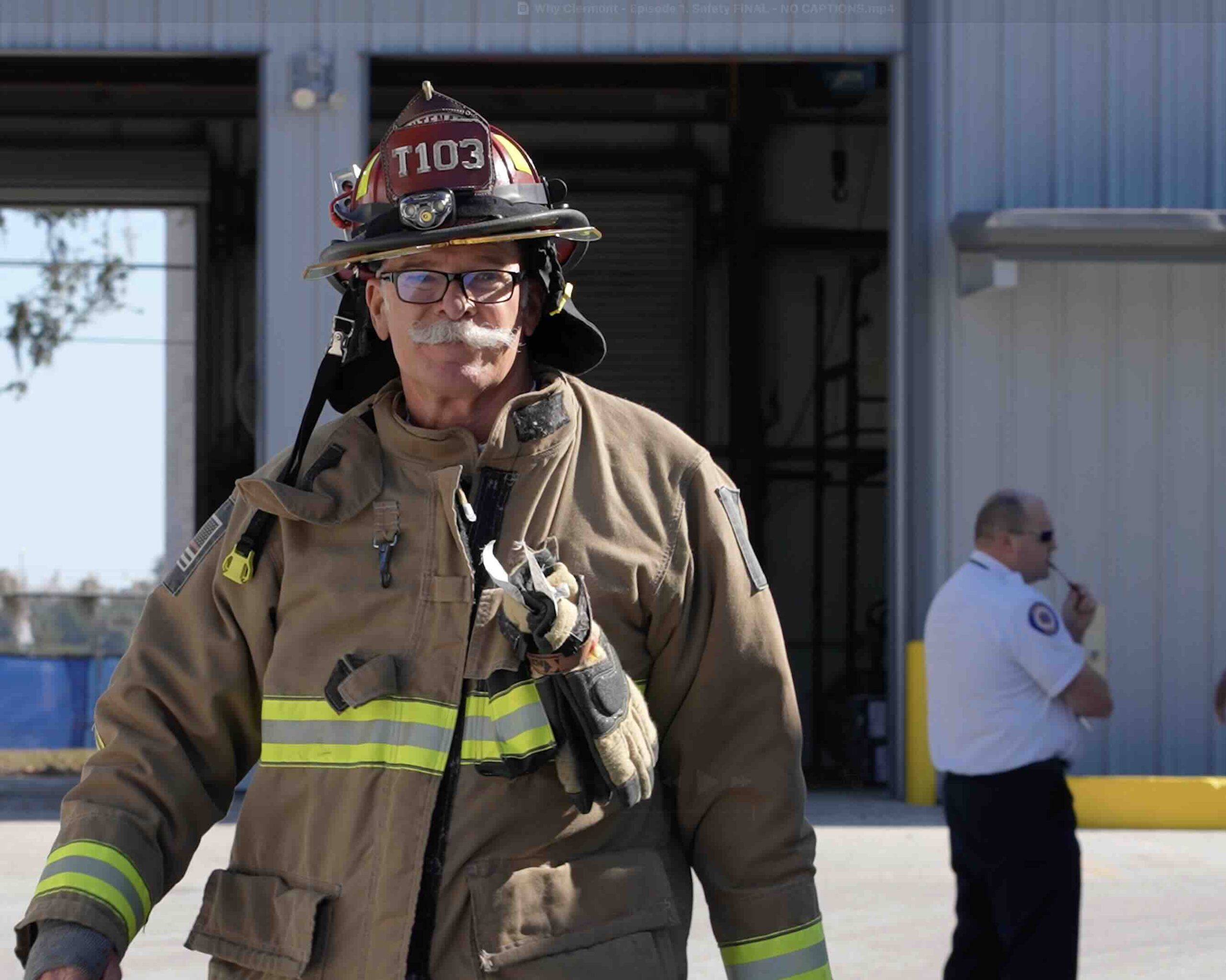
“We want to have… a truck at their door within six minutes, 90% of the time.”
—Fire Chief David Ezell, Clermont Fire Department

9) The lived experience: how residents describe day-to-day confidence
Public safety isn’t something most people think about until they’re choosing where to live. And while reports and policies matter, what many residents pay attention to is how day-to-day life feels in the places they actually spend time, on trails, at parks, and in downtown gathering areas.
In our conversations with local residents and business owners, the theme is usually practical. People talk about being comfortable letting kids ride farther ahead on the trail, spending time downtown after dinner, and choosing where to shop or open a storefront based on how the area functions during busy hours and events.
Local business owner Tina Aldrich shared the “parent perspective” in real terms, she described feeling comfortable letting her son ride the trail and play at parks. Kimberly Grogan described downtown as walkable and said she feels comfortable spending time there, which matters because walkability only works when people actually use it.
City Manager Rick Van Wagner connected public safety to the city’s broader goals, noting that economic growth depends on safety and protection, because businesses, events, and public spaces don’t thrive without it.
Why it matters to you
This is the difference between a place that looks good online and a place that fits your real life. When public safety is treated as a citywide priority, through staffing, standards, planning, tools, and community participation, it often shows up in the routines people care about most.
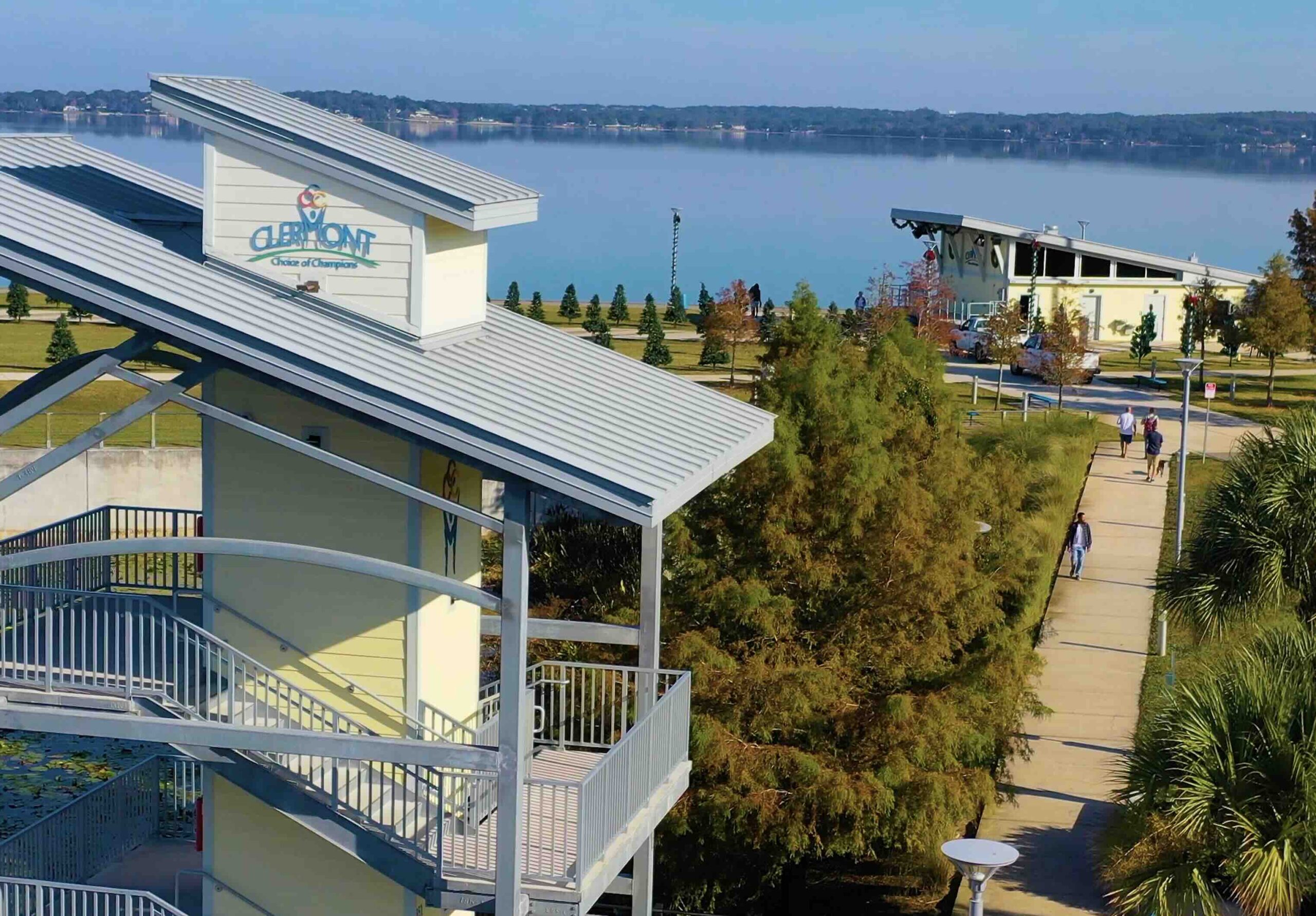
“Being a mom… knowing that my son can go ride on the trail… go play in a park, and I feel safe about that.”
—Tina Aldrich, Clermont Business Owner

If you’re thinking about relocating to Clermont, here’s the quick “why people feel confident here” overview:
Why Clermont?
-
Safety is a stated city goal, not a vague promise. City leadership and public safety leaders have publicly set the bar high, including the stated aim to become the safest city in Florida.
-
Clermont runs a full-service, 24/7 police department. Specialized units are in-house, and the department emphasizes local knowledge, officers who know the community they serve.
-
Professional standards are built into operations. The police department has maintained accreditation through the Commission for Florida Law Enforcement Accreditation, which requires ongoing external review of policies, training, and practices.
-
Technology is used to speed up response and solve cases faster. The department cites tools like license plate readers to help identify stolen vehicles and wanted individuals entering the city, paired with a “keep what works” evaluation mindset.
-
Community partnership is structured and opt-in. Connect Clermont allows residents and businesses to opt in to a camera registry, leaders have emphasized it does not give police direct access to private cameras.
-
Growth planning includes CPTED principles. The city references crime prevention through environmental design, better visibility, smarter layouts, and safer public environments as development expands.
-
Clermont Fire/EMS performance is nationally elite. Clermont holds an ISO Class 1 rating, and leadership highlights rare national accreditation credentials, both tied to readiness and operational standards.
-
Response times and expansion plans focus on staying ahead of growth. Leaders have discussed response-time benchmarks, expanding stations (including Wellness Way), and improving EMS transport to keep service levels strong as the city grows.

Want help narrowing your Clermont-area options?
If Clermont is on your shortlist, and you want clarity before you make a move, we’re here to help.
If you’re buying or selling in 2026, don’t guess. Tell me the community you’re in (or the one you’re targeting), I’ll send you a quick, local-specific plan based on your timeline, price range, and goals.
The next step is simple: Call /text on my cell at (407) 820-7017 or fill out the contact form below (“contact us” button) and we can start the conversation.
No pressure. Just real, clear next steps.
And make sure to subscribe to our YouTube Channel for more Clermont, Minneola, Groveland, and Montverde updates like this one.
Contact usWith better clarity, you make better decisions.
For an in-depth analysis of our local market, check out the 2026 Housing Market Update and Real Estate Strategies by clicking the button below:
2026 Housing Market Update & Real Estate Strategies