2026 Clermont Housing Market Update & Stategies: Winners, Losers, and What to Watch (Clermont • Minneola • Groveland • Montverde)
If you’re making real estate decisions in 2026 based on “Orlando region” headlines, you could be using the wrong playbook. Clermont and the surrounding communities can behave very differently, sometimes neighborhood by neighborhood, even street by street.
I’m setting the foundation for what I’m watching in the 2026 Clermont Florida housing market: buyer negotiation power, seller strategy, inventory shifts, and why pricing, condition, and insurability matter more than ever.
Markets I track closely include Clermont, Minneola, Winter Garden, Groveland, and Montverde, because real estate isn’t just local… it’s hyperlocal.
2026 Market Update: Why Orlando Headlines Can Be the Wrong Playbook for Clermont
If you’re relying on Orlando regional headlines in 2026, you may be using the wrong playbook, because here in the Clermont corridor, the numbers can tell a very different story. And if you’re considering buying or selling in 2026, it’s important to understand this: the decisions you make this year can cost you a lot of money if you’re using the wrong data.
The big question for 2026 is simple:
After a year where many buyers had more room to negotiate in certain pockets, what changes now?
Do buyers keep the upper hand? Or does the balance shift again depending on the town, the neighborhood, and the price point?
For sellers: will 2026 be the year you can still win strong? Or the year where pricing strategy, condition, and even insurability become non-negotiable?
And in a year like 2026, using the wrong data can cost you real money, either in overpaying, underpricing, sitting too long, or losing leverage when it matters most. In this update, I’m breaking down what the current data is signaling, what I believe is most likely ahead in 2026, and who I see as the biggest winners and losers this year, specifically in Clermont, Minneola, Groveland, and Montverde. That’s exactly what we’re diving into today.

Table of Contents
- A quick look back at what 2025 really looked like locally
- The metric that explains 2026 fast: Months of Inventory
- Why Clermont-area towns don’t behave the same
- The 4 forces shaping deals in 2026
- 2026 deal killers sellers can’t ignore (insurance + inspections)
- Winners in 2026
- Losers in 2026
- The opportunity playbook: buyers vs. sellers
- My bottom line for 2026 + how to get a hyperlocal read
1) A Quick Look Back: What 2025 Looked Like Locally
For a good portion of 2025, the market leaned more buyer-friendly compared to the frenzy years. Buyers had more choices. Negotiation leverage returned in many pockets. Bidding wars were rare. Sellers had to be more intentional to get top dollar.
But in the most recent months of 2025, we started seeing signs of tightening, not everywhere and not in every price point, but enough to shift the tone heading into 2026.
This is where people get tripped up: they see a regional headline and assume it applies to their neighborhood. In our corridor, that assumption can be expensive.

But in the most recent months of 2025, we started seeing signs of tightening, not everywhere and not in every price point, but enough to shift the tone heading into 2026.
2) Months of Inventory: The Fastest Way to Understand Who Has the Advantage
Months of inventory is one of the quickest ways to understand market balance.
What it means:
It measures how long it would take to sell all homes currently on the market if no new listings came on and homes continued to sell at today’s pace.
How to interpret it (simple version):
-
Around 6 months is generally a balanced market
-
More than 6 months leans buyer-friendly (more options, more negotiating power)
-
Less than 6 months leans seller-friendly (demand outpacing supply)
Here’s why this matters in 2026: months of inventory can be drastically different from region to region and even town to town.
In the Orlando region (in the snapshot we’re referencing), months of inventory in November 2025 was about 6.9 months, essentially balanced but leaning buyer-side.
But when we zoom into our local corridor, Clermont, Minneola, Groveland, and Montverde, the story changes.
Months of Inventory Snapshot by Town
-
Clermont: just over 4 months
-
Minneola: under 3 months
-
Groveland: just over 4 months
-
Montverde: about 8 months
-
Combined corridor average: just over 4 months
So if you’re going by Orlando headlines, you might think “buyer’s market.” But our corridor, on average, is behaving more like a seller-leaning market, and within the corridor, the towns are behaving very differently.
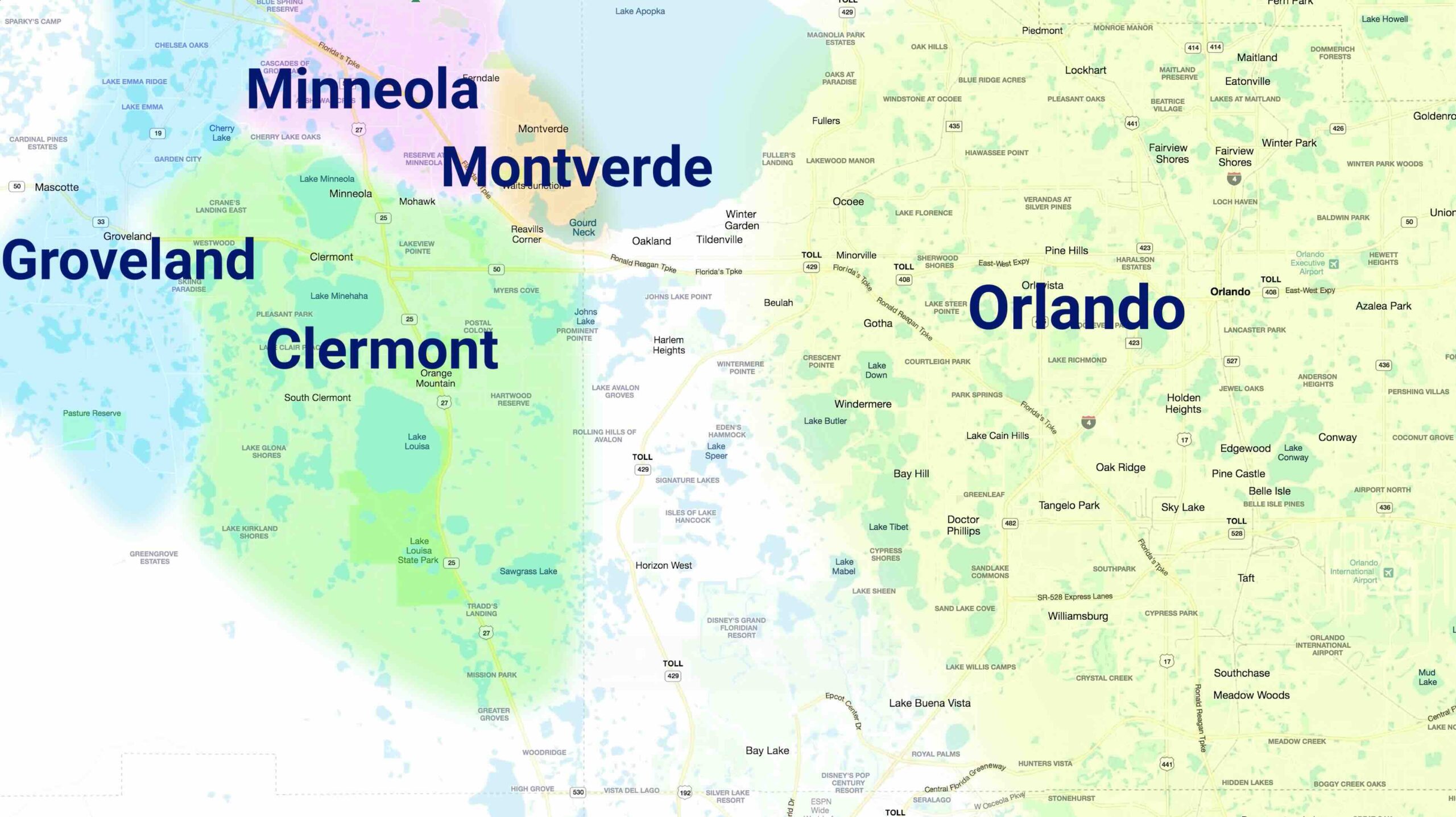
“If you’re going by the Orlando headline, you’d think ‘buyer’s market.’ But our corridor overall is behaving more like a seller’s market and the towns are behaving differently from each other.”
3) Why These Towns Don’t Behave the Same (and Why Price Point Matters)
Clermont and Minneola have such a broad mix of neighborhoods and price points that you can’t generalize. One pocket can move faster while another sits.
Montverde is a smaller market with fewer homes available at any time. Momentum can swing quickly based on just a handful of listings.
Groveland often feels the impact of new construction more directly. Builder inventory and incentives influence resale pricing faster.
This is why “Is it a buyer’s market or a seller’s market?” is usually the wrong question. The better question is:
For who? In what price point? In what community? And compared to what competition?
Here’s the pro-level layer that matters even more in 2026:
-
Entry-level and mid-range buyers tend to be far more payment-sensitive because affordability is tight.
-
Higher-end buyers can be less payment-driven and more lifestyle-driven, but they still care about value and friction.
So yes, you can have one segment slowing down while another stays steady. That’s exactly what a strategy market looks like.
4) The Four Forces Shaping Deals in 2026
Force #1: Who’s Moving Here (and Why Demand Still Exists)
We’re still seeing relocation from multiple directions: the Northeast, the Midwest, the West Coast and importantly, from within Florida.
A major trend: coastal residents moving inland to what they call “the mountains.” They mean Clermont, Minneola, and Montverde, rolling hills, lake lifestyle, trails, and the “not the coast” peace of mind.
The motivations are clear:
-
hurricane and flooding concerns
-
insurance cost pressure
-
long-term stability
-
lifestyle: hills, lakes, trails, outdoor living
That continued demand keeps certain pockets supported, even when broader headlines make it sound like everything cooled evenly.
Force #2: Monthly Cost Matters More Than List Price
Most financed buyers aren’t shopping by sales price anymore. They’re shopping by monthly payment comfort.
That monthly number is influenced by more than people realize:
-
homeowners insurance (and insurability)
-
HOA dues
-
property taxes
-
CDD fees (if applicable)
-
and even utility costs
A home can be priced “right” and still lose if the monthly numbers don’t work.
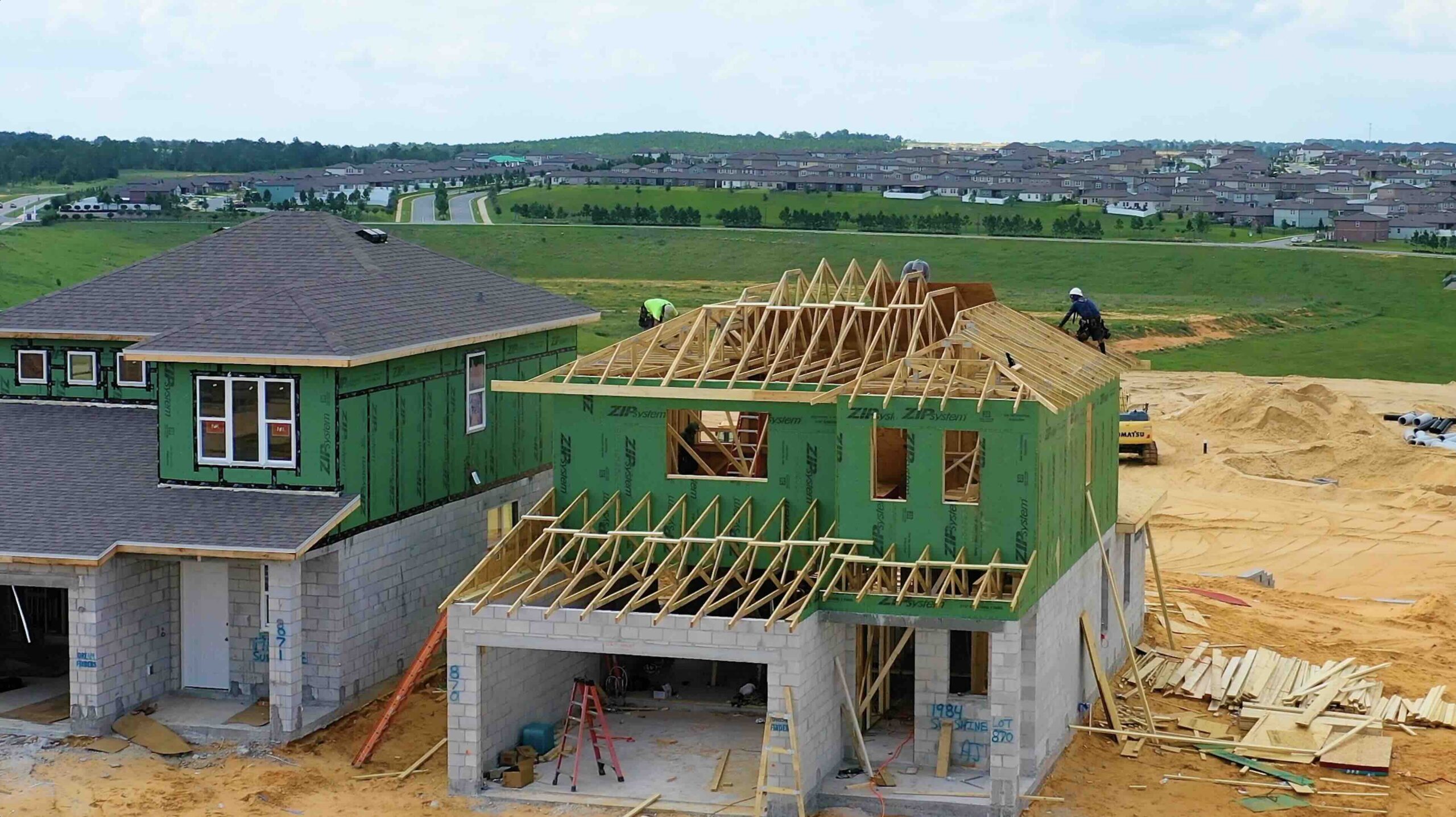
“In 2026, the monthly payment is the price.”
Force #3: Builders and Incentives Shape the Playing Field
In our corridor, new construction isn’t just an alternative, it’s a major influence.
Builders can offer incentives that change monthly payments dramatically:
-
closing cost credits
-
rate buydowns
-
price reductions on inventory homes
Resale sellers are competing against today’s builder options, not yesterday’s market.
Force #4: Seller Concessions Are Becoming Normal
As builder incentives become a baseline comparison, seller concessions have become more common, and many qualified buyers are using concessions strategically to improve monthly affordability.
Concessions are never guaranteed. They depend on:
-
price point
-
condition
-
days on market
-
seller motivation
-
and what other options buyers have that week
But in 2026, for many financed buyers, monthly cost is the price, and targeted concessions can be the difference between a buyer moving forward confidently or walking away.
5) 2026 Deal Killers Sellers Must Understand: Insurance and Inspections
If you’re considering selling in 2026, this section matters.
Insurance costs and insurability can make or break a deal. Two items come up constantly:
-
Roof age
When a roof is over about 10 years old, buyers can see premium shock, underwriting restrictions, or tougher terms. Buyers compare that friction to other homes that feel easier to insure. -
Hot water heater age
If a water heater is 12 years or older, we’re seeing situations where some insurance carriers require replacement or they won’t insure the home.
These issues can trigger renegotiations, delays, or cancellations. The good news is that proactive sellers can remove friction before listing, and in some cases roofing solutions can be structured to be paid at closing.
Also, inspection leverage is stronger again. Buyers are negotiating repairs and credits more often, so sellers win when they handle obvious repairs upfront and have documentation ready.
“Preparation isn’t an extra. It’s profit protection.”
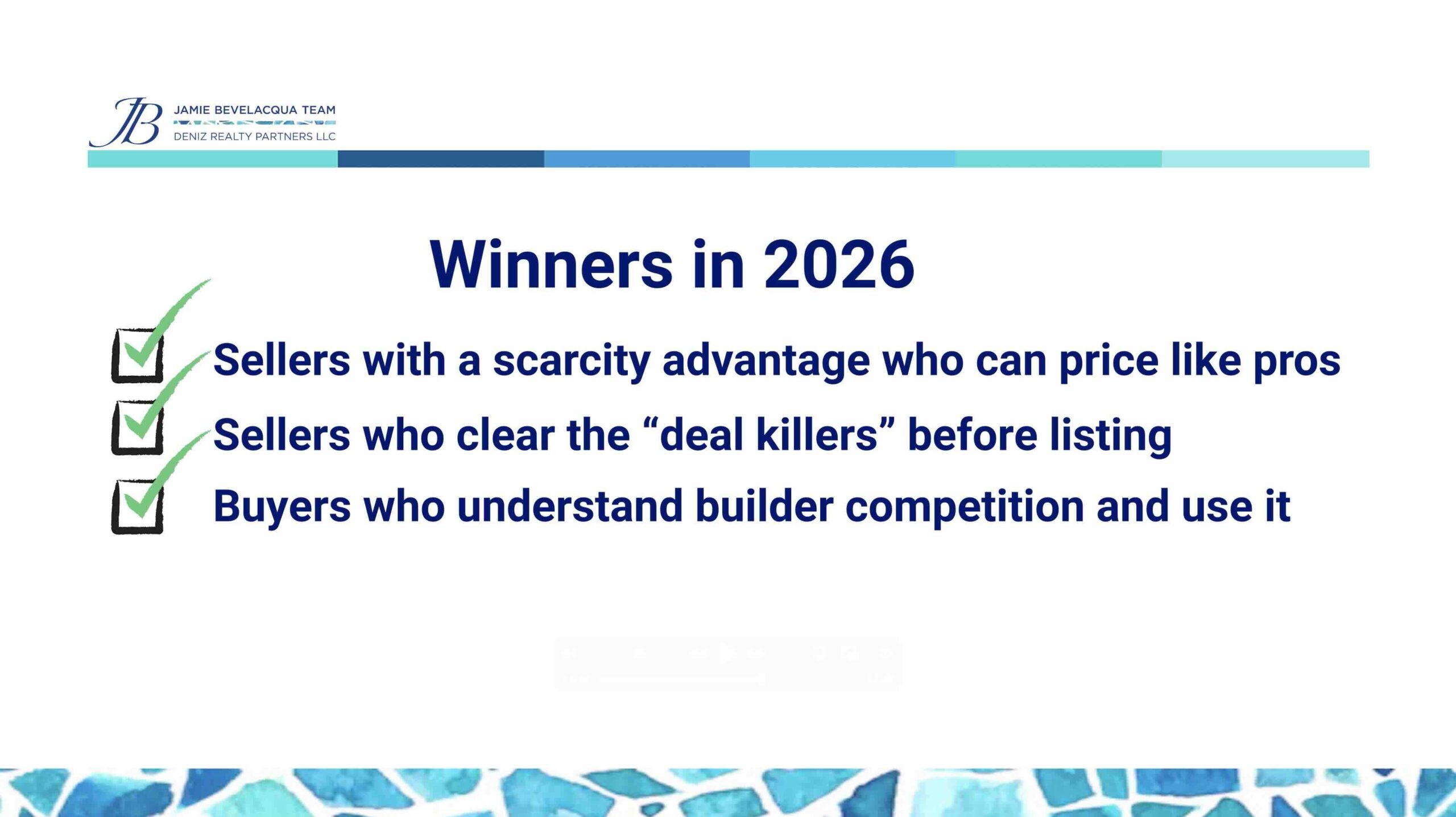
Winners in 2026!
6) Winners in 2026
Winner #1: Sellers with a Scarcity Advantage Who Price Like Pros
These are homes buyers can’t easily replace.
Scarcity advantages include:
-
premium lots (views, no rear neighbors, conservation/water views, oversized lots)
-
lakefront or lake-access homes
-
pool homes in neighborhoods where pools are rare
-
unique floor plans, multi-gen setups, in-law suites, true flex space
-
location advantages (trails, walkability pockets, highly desired school zones)
In 2026, buyers are cautious. They don’t stretch “just because.” They stretch for something they can’t find everywhere.
But the win isn’t “price it high because it’s special.” The win is pricing like a professional, based on current competition and current buyer behavior, not peak-market memories. Scarcity + smart pricing is still a powerful combination.
Winner #2: Sellers Who Clear the Deal Killers Before Listing
In 2026, the best listings are not just “nice.” They’re transaction-ready.
Buyers are asking: “Will this deal be smooth or a headache?” And they can feel it when they walk through a home.
Sellers win when they remove uncertainty:
-
system ages are known and clearly communicated
-
receipts and service records are available
-
obvious repairs are handled before listing
-
insurance friction is minimized
When sellers take care of obvious items upfront, two things happen:
-
the home feels safer (more buyer confidence)
-
buyer leverage gets smaller (less ammunition in inspection negotiations)
In 2026, preparation isn’t an extra. It’s profit protection.
Winner #3: Buyers Who Understand Builder Competition and Use It
Smart buyers don’t guess in 2026. They understand builders shape the playing field.
Builders can offer incentives that reset monthly affordability, so winning buyers:
-
identify which communities have the strongest incentives right now
-
understand what those incentives do to payment (not just list price)
-
structure offers strategically (concessions, buy-downs, terms)
-
use builder competition as leverage when negotiating on resale homes
A buyer who understands builder terms often makes stronger decisions and negotiates with more confidence.
Winner #4: Sellers Who Market Like It’s 2026 With Strategy and Targeted Reach
In 2026, selling isn’t about “putting a sign in the yard and letting the market do the rest.” It’s about strategy because buyers are more selective, they’re comparing more options, and they’re making decisions online before they ever step through a front door.
That’s why sellers who win understand this simple truth:
Exposure isn’t the same thing as marketing.
A lot of listing agents still rely on what I call passive, generic exposure:
-
take photos
-
put it on the MLS
-
let it syndicate to the big real estate sites
-
and hope it gets traction
That approach gets your home “seen,” but it often fails at the most important job in 2026: creating urgency with the right buyer.
Strategic marketing is different. It’s about positioning, making your home feel like the best option in its category, and then getting it in front of the people most likely to buy it.
The sellers who win in 2026 choose an agent who does more than list. They choose an agent who:
-
helps prep the home so it shows like its best version (not just “clean enough”)
-
builds a compelling story around the home’s lifestyle and advantages
-
creates true marketing videos (not just a music-only walkthrough) that help buyers feel the home and understand why it stands out
-
runs targeted digital campaigns that reach real buyers actively looking for a home like yours, your neighborhood, your price range, your features, your lifestyle category
Because in 2026, the goal isn’t to reach everyone. It’s to reach the right people, fast, during your most powerful window: the first 10-14 days.
And one quick note that’s worth saying out loud: if you’re reading this blog right now, it’s because targeted marketing works. Content like this is designed to reach people who are actively paying attention to the market and looking for clarity, exactly the kind of buyer or seller you want your future listing to attract.
Winner #5: Buyers Who Focus on Total Monthly Cost, Not Just Purchase Price
In 2026, the monthly payment is the price, especially for financed buyers.
Two homes can have the same sales price but very different monthly costs due to:
-
homeowners insurance (and whether the home is easy to insure)
-
HOA dues
-
property taxes (especially important on new construction after reassessment)
-
CDD fees (if applicable)
-
escrow changes after year one
Winning buyers run numbers early. They don’t fall in love with a list price and hope the payment works.
They also tend to be fully approved and backed by a strong local lender who can execute, because in this market, clean execution can beat a slightly higher offer that feels uncertain.
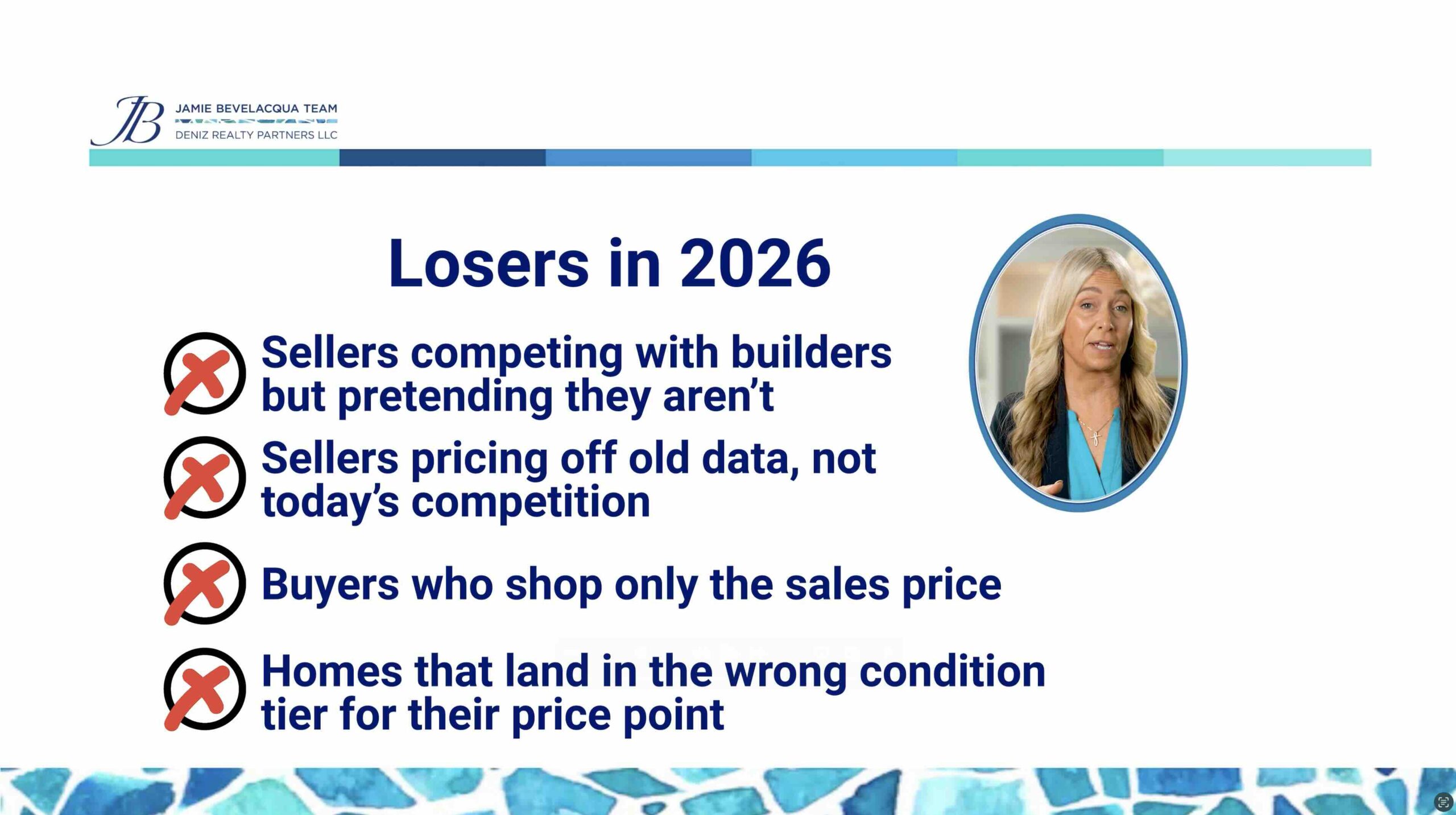
Buyers don’t stop comparing… Sellers have to start competing strategically.
7) Losers in 2026
Loser #1: Sellers Competing with Builders but Pretending They Aren’t
If builders nearby are offering incentives that reduce monthly payments, buyers will compare and they’ll choose what feels easier.
Even if a resale home is priced lower, the payment can still be higher if the buyer can’t replicate builder terms.
Sellers lose when they ignore builder competition instead of:
-
clearly positioning the home’s advantages (lot, upgrades, lifestyle)
-
or competing intelligently with terms when needed
In 2026, buyers don’t stop comparing. Sellers have to start competing strategically.
Loser #2: Sellers Pricing Off Old Data, Not Today’s Competition
This is the “test the market” mistake and it’s expensive.
It usually goes like this:
-
list too high based on old comps or peak-market expectations
-
showings are slow
-
buyers wait
-
reductions start
-
the listing goes stale
-
negotiation gets worse, not better
In 2026, days on market is a signal. The longer a home sits, the more buyers assume there’s an issue, even when nothing is wrong. That perception creates leverage for the buyer.
Most sellers don’t realize: price reductions often cost more than pricing correctly from day one because you lose your biggest momentum window when the listing is new.
Loser #3: Buyers Who Shop Only Sales Price
These buyers fall in love with list price, then get hit with the monthly reality:
-
insurance premiums
-
HOA fees
-
taxes
-
CDD fees
-
escrow changes and reserves
When the payment comes in higher than expected, they scramble for concessions late, renegotiate from a weaker position, or walk away and start over.
In 2026, buyers who win are the ones who shop by total cost, not just sticker price.
Loser #4: Homes in the Wrong Condition Tier for Their Price Point
Condition tiers are widening in 2026. Buyers aren’t paying “A-condition” pricing for “B- or C-condition” reality.
In plain terms:
-
A condition: updated, clean, move-in ready, low repair risk
-
B condition: decent, but dated or needs obvious work
-
C condition: deferred maintenance, older systems, repair-heavy
A, B or C home can still sell, but it must be priced and positioned accordingly. Sellers lose when they want top-dollar pricing while buyers see risk, age, and future expense.
8) Opportunities in 2026: Buyers vs. Sellers
Opportunities for Buyers
2026 can be a strong year for buyers who shop smart. The best opportunities tend to show up with:
-
homes sitting on the market longer
-
listings with price reductions
-
sellers open to terms that improve monthly payment (especially concessions)
-
buyers who understand builder incentives and use them as leverage
Opportunities for Sellers
For sellers, the opportunity is positioning and execution:
-
know your real competition (including builders)
-
remove insurance friction where possible
-
tighten up condition and presentation
-
price it right based on today’s market from day one
Don’t test the market. In 2026, the first 10-14 days are your power window. Miss that window by starting too high, and you lose momentum, and price reductions usually cost more than pricing correctly upfront.
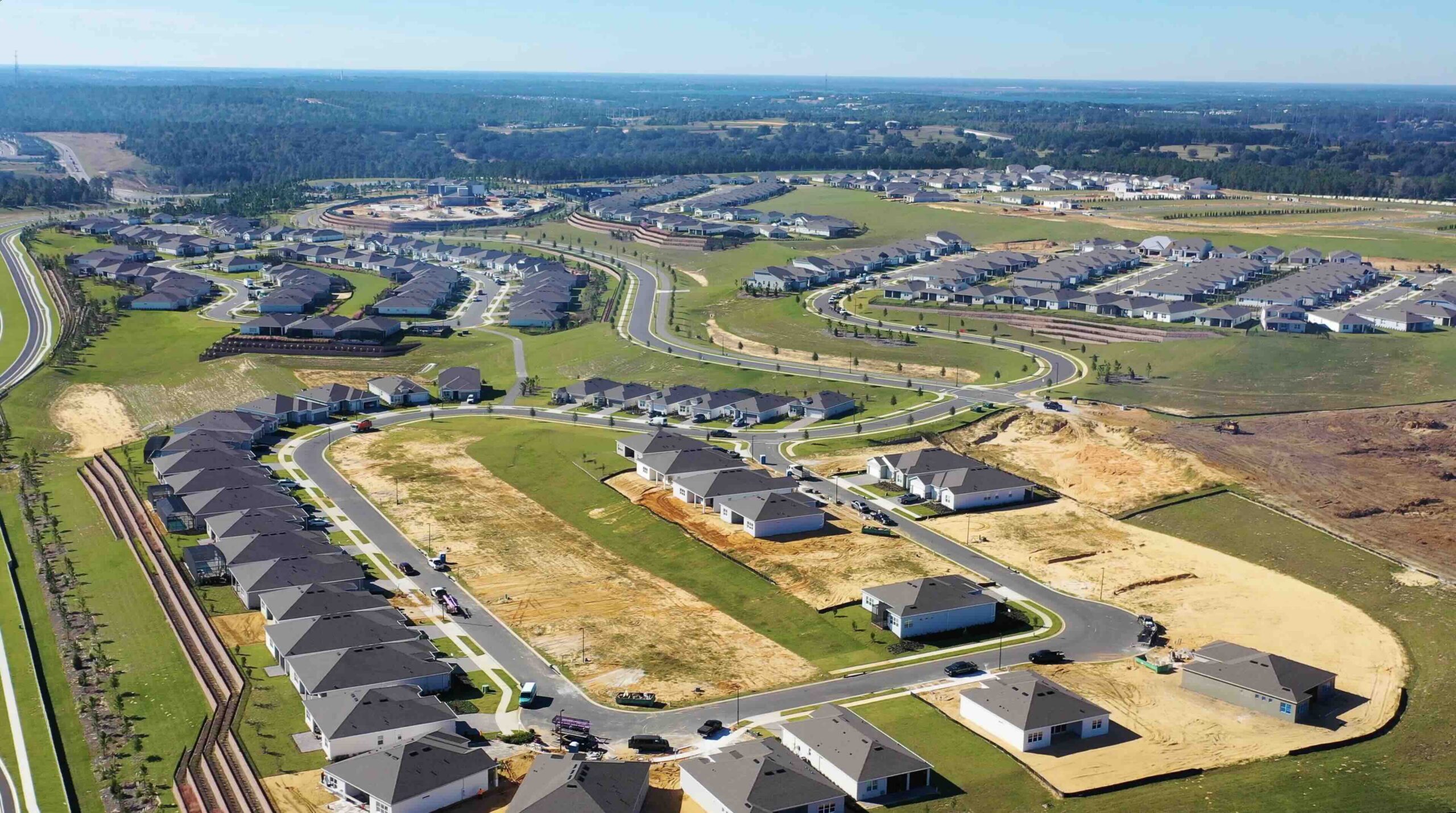
2026 is a strategy market.
9) My Bottom Line for 2026
We’re not going back to frenzy conditions unless something dramatic changes, but we’re also not in a frozen market.
2026 is a strategy market.
And strategy looks different depending on the town, the community, the price point, the condition tier, and the competition that week.
Regional stats are helpful for context. But your outcome is decided by your specific pocket, and what buyers are responding to right now.
No worries, no stress, I’ll help you understand what that pocket is doing and what you should be watching for.
Ready for clarity on your next move?
If you’re buying or selling in 2026, don’t guess. Tell me the community you’re in (or the one you’re targeting), I’ll send you a quick, local-specific plan based on your timeline, price range, and goals.
The next step is simple: Call /text on my cell at (407) 820-7017 or fill out the contact form below (“contact us” button) and we can start the conversation.
No pressure. Just real, clear next steps.
And make sure to subscribe to our YouTube Channel for more Clermont, Minneola, Groveland, and Montverde updates like this one.
Contact us