
Villa Esperanza: Inside One of Bella Collina’s Most Distinctive Estates
What Makes a Home Worth Remembering?
Every year, a handful of homes in Central Florida are recognized for something beyond square footage or finishes. They’re recognized for how everything comes together; the architecture, the craftsmanship, and the feeling a home creates the moment you walk through the door.
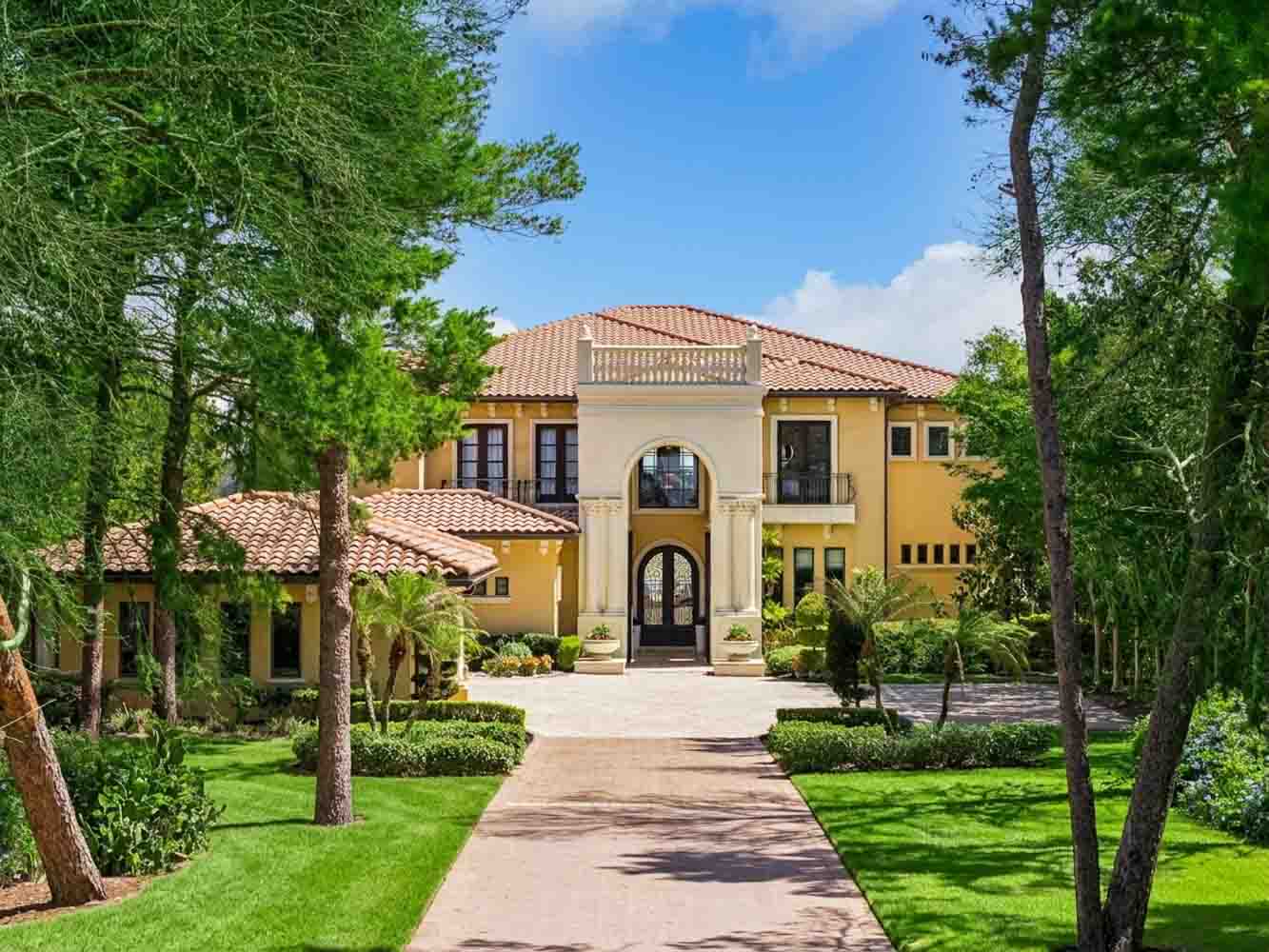
That’s the story of Villa Esperanza, an award-winning estate inside the guard-gated community of Bella Collina in Montverde, FL.
We didn’t start by asking how to market this home. We started by asking what makes it unlike any other. That question shaped an 18-minute architectural documentary and this piece is your introduction to the story behind it.
Watch the Villa Esperanza documentary here →
The Inspiration Behind the Design
To understand Villa Esperanza, you have to start with the architect who shaped Palm Beach itself: Addison Mizner.
By the 1920s, Mizner was designing homes for some of America’s most influential families. His work helped create a distinctive Palm Beach look; graceful, textured, and unmistakably Florida. He never followed one style or one rulebook. He blended Spanish, Italian, Moorish, and Mediterranean influences, using texture and natural variation to create homes that felt collected over time rather than built all at once.
Mizner explained his own philosophy simply:
“There should be no mechanics in art. Art should be a restful thing, a state of mind where one has forgotten the T-square and the dividers… Everything in a house should be made a part of the harmony of restful pleasing lines.”
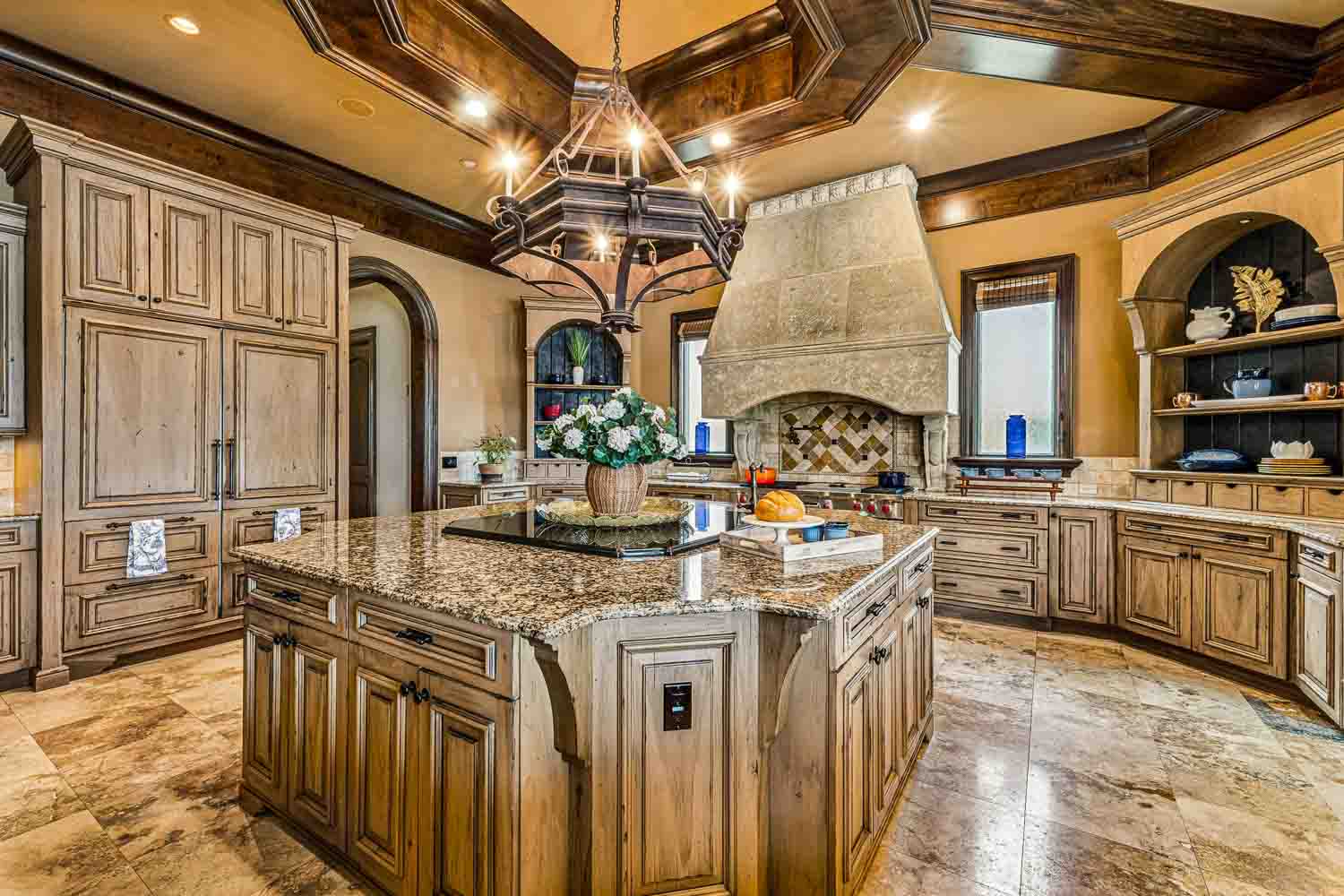
Villa Esperanza is a Palm Beach-style estate interpreted through Bella Collina – old-world, substantial, and rooted in Florida. That idea gives the home its discipline. The cast stone, cypress, ironwork, marble, and Chicago brick throughout aren’t just finishes. They’re the vocabulary of the house, and each material carries weight, texture, and permanence.
This isn’t a home chasing a trend. It’s a home that feels like it belongs to the land and that’s what separates decoration from design story.
A Home Designed to Be Experienced, Not Just Viewed
Great architecture, like great art, guides the eye. Villa Esperanza reveals itself in layers rather than all at once.
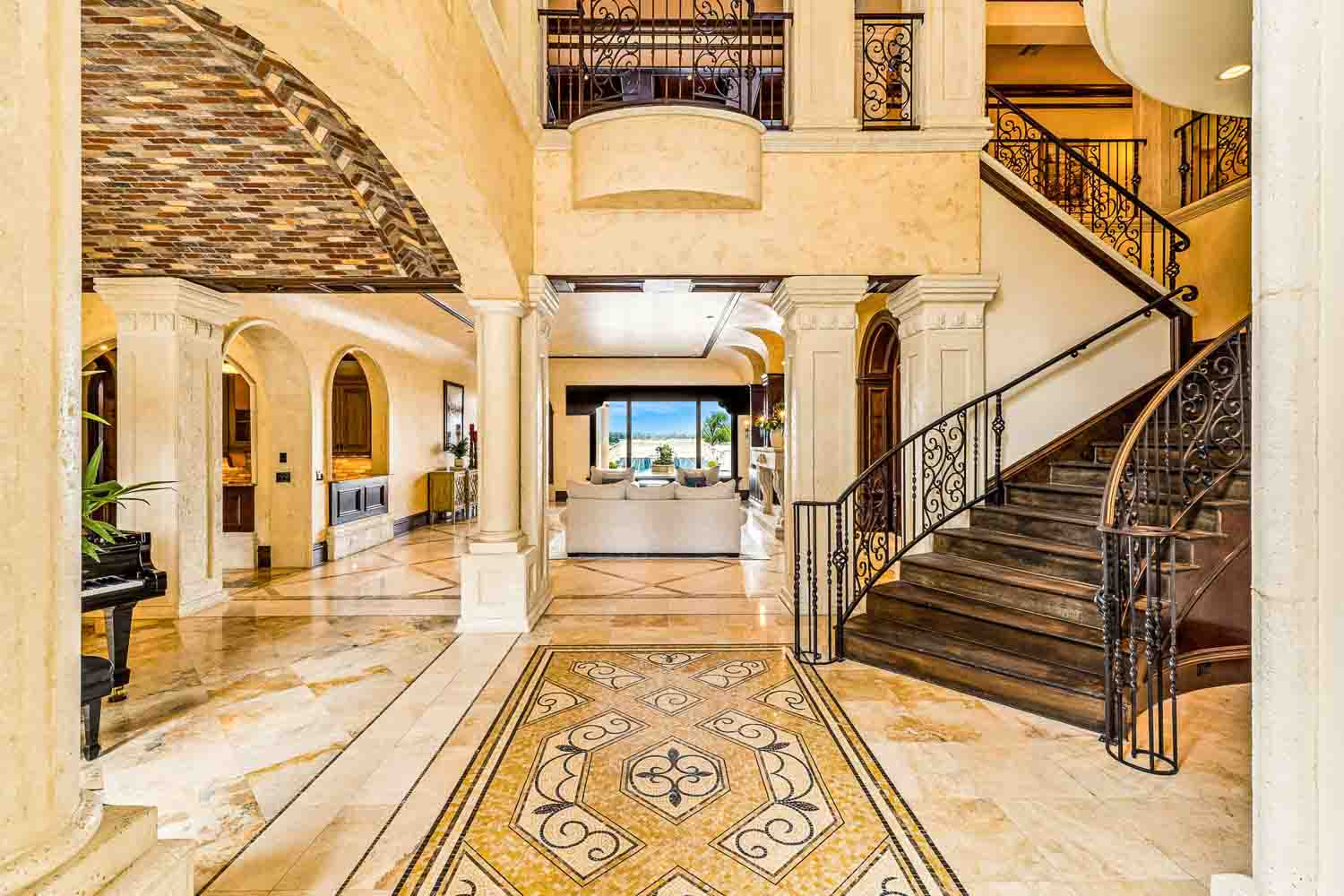
The entry cloister slows you down first; reflecting pool, terracotta rooflines, and iron lanterns creating a moment that feels quiet and intentional before you’re even through the front door. Step inside, and the iron stairwell draws the eye upward while the Grand Salon opens just enough to hint at the scale of the home without revealing everything at once.
As you move deeper into the home, wood archways signal a shift – from formal, public spaces into rooms that feel private and relaxed. The piano and dining area introduces something more layered still: simple round columns set against larger cast stone columns, with a dark Chicago brick barrel-vaulted ceiling replacing the more expected Mediterranean terracotta. On paper, those elements could compete. In person, the contrast works, it draws you in rather than pulling focus.
Nothing about this home happens by accident. It’s composed the way a painting is composed: with a clear sense of where the eye should go next.

Craftsmanship That Rewards a Closer Look
Craftsmanship is often the invisible discipline behind a home like this; the details most visitors won’t consciously notice, but would immediately miss if they were done poorly.
At the entry, custom iron doors and a hand-set mosaic floor were designed to speak to one another, turning the entry hall into a finished architectural moment rather than a space that depends on furniture to feel complete. In the Grand Salon, three rare Venetian-style archways frame the fireplace wall – details that required skilled framing and refined plasterwork to execute correctly. The walls and ceilings carry a hand-troweled plaster finish, treated to create an aged, timeworn appearance rather than a flat, manufactured one.
Even the air-conditioning ducts were minimized directly into the plaster ceiling so that modern function disappears into the architecture instead of interrupting it. That’s the kind of planning most buyers will never consciously register and exactly the kind of planning that separates a well-built home from an artfully composed one.
Built for the Way People Actually Live
An estate of this scale could easily feel formal to the point of being impractical. Villa Esperanza avoids that.
The Grand Salon provides the drama, but the piano room, upstairs living space, and outdoor areas create smaller, livable moments throughout the home.
Upstairs, a theater, bar, game table, and pool table could have felt disconnected from the rest of the house – instead, the space carries the same architectural language, down to a Mizner-inspired tavern bar with diamond-tile backsplash and coffered ceiling.
Outside, the pool area is large enough to host a major gathering, but it’s broken into smaller zones – covered seating, an outdoor kitchen, a fountain, and a trellis, so the same space that holds a crowd can also make one conversation feel private.
That balance, between grandeur and livability, is harder to achieve than it looks. It’s also what makes a home like this feel less like a showpiece and more like a place people can actually build a life around.

Why It All Works Together
The details of Villa Esperanza don’t exist in isolation. The ironwork that begins at the front doors carries through the stairwell, railings, and lanterns. The cast stone columns repeat upstairs and downstairs, quietly tying the home together. The materials; precast stone, plaster, marble, Chicago brick, cypress – each have their own character, but none of them compete with the others.
Nothing feels common. Nothing feels like it wandered in from another house.
That’s the difference between a home that’s simply well-built and one that’s fully composed and it’s exactly what makes Villa Esperanza one of the most distinctive properties we’ve had the opportunity to represent in Bella Collina.
Watch the Full Story
This post only begins to tell the story behind Villa Esperanza. The full 18-minute architectural documentary explores the home’s inspiration, craftsmanship, and design in far greater depth – including the moments and materials that don’t fully translate to photography alone.
[Watch the Villa Esperanza Documentary HERE→]
Interested in touring Villa Esperanza in person, or curious what a home like this is worth in today’s Bella Collina market? [Schedule a private consultation with the Jamie Bevelacqua Team]
With better clarity, you make better decisions.